Care basicsHP-04
When Should You Repot Houseplants? Month and Plant Charts, Signs, Steps and Aftercare


The time to repot houseplants is May to September, when they grow at 15°C or above. Skip midwinter and midsummer, and follow each plant's best season.

In this article (16 sections)
- Conclusion: When should you repot houseplants?
- How does the time to repot differ by plant?
- What signs show a houseplant needs repotting?
- Should you repot a houseplant right after buying it?
- What tools do you need to repot a houseplant?
- How do you repot a houseplant?
- Should you put stones in the bottom of the pot?
- How do you choose the pot size when repotting a houseplant?
- How do you care for a houseplant after repotting?
- What are common mistakes when repotting houseplants?
- What if you have to repot a houseplant in winter?
- What if you do not want it bigger, or the pot is too big to repot?
- What terms come up when talking about repotting houseplants?
- What else should you know along with repotting houseplants?
Frequently asked questions about repotting houseplants6
- Jump to this section
- What month should you repot houseplants?
- What should you do about repotting after buying a houseplant?
- Can you change the soil when repotting a houseplant?
- What happens if you never change a houseplant's soil?
- How should you water a houseplant after repotting?
- Is it OK to repot in August or September?
- Sources
Conclusion: When should you repot houseplants?
The time to repot houseplants is May to September, when it is 15°C or warmer and growth is strong. The safest months are May and June, which fall within the best season for every plant.
The usual advice is "spring to early summer" or "May to September." Gardening manufacturers' guides and U.S. university resources agree on one point: repot while the plant is growing.
The confusing part is that sources differ, some starting in April and some running to September. Here is the key point. Decide by temperature and the plant's growth, not by the month, and you will not be unsure.
A Hyponex guide to monstera says "when it is 15°C or warmer." The spread in months simply reflects when that temperature arrives.
This article covers the following, in order.
- A month-by-month chart and the best season for each plant
- Signs it needs repotting, and what to do with a newly bought plant
- Tools, choosing a pot, and the steps
- Care after repotting, and common mistakes
- When you have to do it in winter, or do not want the plant to get bigger
| Month | Repotting | Reason |
|---|---|---|
| January to February | Avoid | Dormant, so roots recover poorly |
| March | Wait | Growth has not started yet. Wait for warmer weather |
| April | Depends on the plant | April starts the season for pachira. You can begin once days stay at 15°C or above |
| May to June | Best | In season for every plant. Roots recover quickly |
| July to August | Possible. Avoid heat waves | Repotting in midsummer may weaken the roots |
| September | Possible | In season for monstera, pachira and rubber plant. Wait until the heat eases |
| October | Early in the month only | Hold off once days below 15°C become frequent |
| November to December | Avoid | Growth stops, and it turns cold before roots spread |
How does the time to repot differ by plant?
| Plant | Repotting |
|---|---|
| Monstera deliciosa | May to Sep, every 2 years |
| Pachira aquatica (money tree) | Apr to Jun or Sep, every 1 to 2 years |
| Pothos (Epipremnum aureum) | May to Aug, every 2 to 3 years |
| Ficus microcarpa | May to Jun, every 1 to 2 years |
| Snake plant (Dracaena trifasciata) | May to Aug, every 1 to 3 years (sources vary) |
Source: Hyponex Plantia care guides, RHS hardiness ratings, ASPCA toxic plant list
The table above gives the best season and frequency for each plant. All of it is based on Hyponex growing guides.
The five plants' seasons overlap in May and June. If you repot several pots at once, it is safest to group them in these two months.
Even within the same manufacturer, though, the frequency varies between pages. Here are the differences across the sources we checked.
| Plant | Best season | Frequency | Differences between sources |
|---|---|---|---|
| Monstera | May to September (spring to autumn, 15°C or above) | Once every 2 years | Some pages say once every 2 to 3 years |
| Pachira | April to June, and September | Once every 1 to 2 years | Sooner if water soaks in poorly |
| Pothos | May to August | Once every 2 to 3 years | While it is growing vigorously |
| Ficus microcarpa | May to June | Once every 1 to 2 years | Roots recover quickly in the growing season |
| Sansevieria | May to August | Once every 1 to 2 years | Some pages say once every 2 to 3 years |
| Rubber plant | May to September (except midsummer) | Once every 1 to 2 years | KINCHO Engei says at least once every 2 to 3 years |

Differences in frequency come down to plant size and growth speed. A Clemson University resource says fast growers need repotting every year and slow growers every 2 to 3 years.
Frequency is only a guide; what decides it is the signs in the next section. Even if not many years have passed, once the signs appear, wait for the right season and repot.

If you have many pots, it is easiest to repot them all in May or June. Every plant is in season in those months.
What signs show a houseplant needs repotting?
The two main signs are roots coming out of the drainage hole and water that will not soak into the soil. Yellowing lower leaves and new leaves getting smaller are also clues.
University of Illinois and KINCHO Engei resources list these signs for repotting.
| Sign | How to check | How urgent |
|---|---|---|
| Roots coming out of the drainage hole | Lift the pot and look underneath | Wait for the season, then repot |
| Water does not soak in and overflows at the top | When watering, see if water pools on the surface | Wait for the season, then repot |
| Roots showing on the soil surface | Look at the base of the plant | Wait for the season, then repot |
| Wilting between waterings | See if it dries faster than before | The pot is full of roots. Do it soon |
| New leaves are smaller than before | Compare with older leaves | Also suspect light |
| Lower leaves yellow and drop | Use a finger to check whether the soil is wet inside | If wet, suspect root rot first |
| No drainage hole in the pot | Look at the bottom of the pot | Move it to a pot with a hole in the right season |
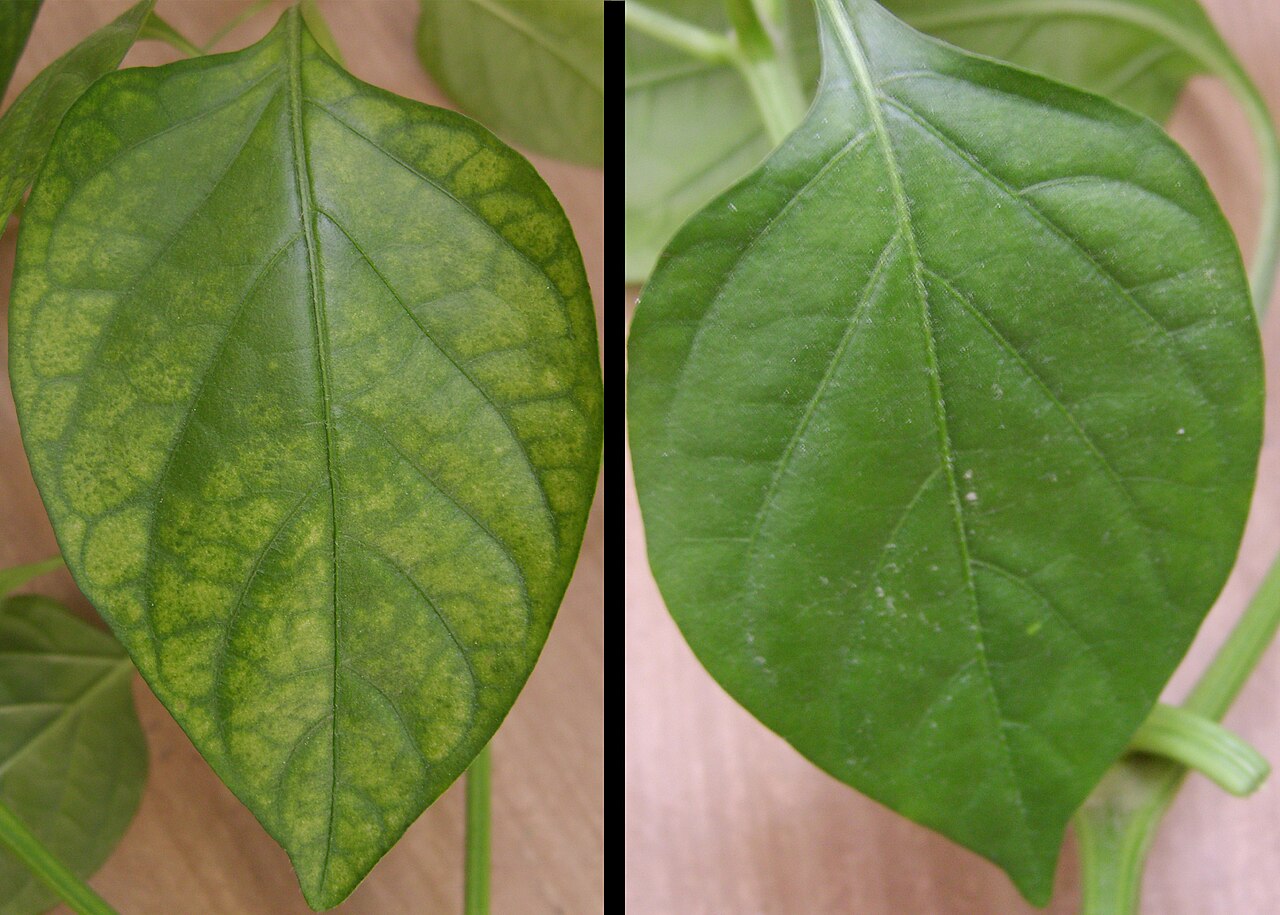
Yellowing lower leaves can come from either being root-bound or root rot. If the soil is wet deep down and the base is soft, deal with it first using Treating Houseplant Root Rot.
Even if roots are coming out of the bottom, there is no need to rush into repotting in midwinter. A Clemson University resource says dormant or weakened plants should not be repotted.
Should you repot a houseplant right after buying it?
Do not repot right after buying; let it settle into its spot, then repot in the right season. If it is in a container with no drainage hole, move it to a pot with a hole in the right season.
A Hyponex guide to Ficus microcarpa says this. Right after purchase or after a move, the plant may drop leaves.
Repotting is a big change in environment for the roots. Doing it right after purchase adds to the strain on the plant.
On the other hand, a University of Illinois resource says that if the pot has no drainage hole, it is time to repot into one that does. A container that does not drain leads to root rot.
Give a newly bought plant a few weeks to settle into its spot first. When new leaves start to grow, that is your cue to repot.
What tools do you need to repot a houseplant?
With a pot, houseplant soil, a mesh for the drainage hole and scissors, you can repot. Pot-bottom stones, chopsticks, a soil scoop and a sheet make the job easier.
| Tool | How to choose | Needed? |
|---|---|---|
| New pot | One size bigger than the current pot, with a drainage hole | Needed |
| Houseplant soil | Fresh soil that drains well | Needed |
| Drainage-hole mesh | Lay it over the hole so soil does not wash out | Needed if the hole is large |
| Scissors | For cutting damaged roots. Disinfect before use | Needed |
| Pot-bottom stones | If used, keep the layer thin | Optional |
| Chopsticks or a stick | Poke to work soil into gaps between roots | Handy to have |
| Soil scoop and sheet | To avoid spilling soil | Handy to have |
Commercial houseplant soil already has its pH, drainage and aeration adjusted (Hyponex). Mixing your own soil is covered in Choosing Soil for Houseplants.
As a KINCHO Engei guide notes, potting soil with fertilizer already mixed in needs no base fertilizer at planting.
How do you repot a houseplant?
Water less for a few days beforehand, unpot the plant, shake off old soil, cut damaged roots and plant in a pot one size bigger. Finally, water until it runs out of the bottom.
The steps are as follows, based on Hyponex and KINCHO Engei guides.
- Water less for a few days beforehand so the soil dries
- Lay mesh over the hole of the new pot and fill about a third of the pot with soil
- Tap the rim of the pot lightly and take the plant out
- Loosen the packed soil by hand and remove about a third of the old soil
- Cut black, damaged roots with clean scissors. Untangle roots that have circled the pot
- Adjust the soil level so the plant sits at the same depth as before, and set it in
- Fill the gaps with soil, poking lightly with a chopstick to work soil between the roots
- Stop about 3 cm below the rim, leaving room to hold water
- Water thoroughly until water runs out of the bottom of the pot
Keep the soil depth the same as in the old pot. A Clemson University resource says not to add soil on top of the root ball.
Do not pack the soil down hard. The same resource says to press only lightly with your fingers and not to compact wet soil.
How much to break up the root ball (the clump of roots and soil) depends on the plant and the season. A Hyponex guide says to loosen it if the soil has packed hard, and to leave it as is if not.
Stopping the soil about 3 cm below the rim keeps water from overflowing when you water. This gap is called the water space.
Should you put stones in the bottom of the pot?
If you use pot-bottom stones, a thin layer is enough. Japanese manufacturers include them in their steps, while U.S. universities say a layer of stones does not improve drainage.
Japanese gardening manufacturers' steps put pot-bottom stones over the mesh, then add soil. The layers look like the diagram above.
Clemson University and University of Illinois resources, on the other hand, say not to make a layer of stones at the bottom. Their explanation is that a stone layer actually slows water movement.
Putting the two together, this is an easy way to handle it.
- Always lay mesh so the drainage hole does not get blocked
- Keep pot-bottom stones thin, just enough to cover the hole
- Rather than a thick layer that leaves less room for soil, use soil that drains well
Soil, not a layer of stones, decides drainage. Old soil turns clay-like and drains poorly (Hyponex).
How do you choose the pot size when repotting a houseplant?
Choose a pot about 3 cm wider than the current one, which is one gō (Japanese pot size number) up. A pot that is too big keeps the soil from drying and leads to root rot.
The Japanese pot size "gō" is a measure of diameter, and 1 gō is about 3 cm (Hyponex, KINCHO Engei). A size 5 pot is about 15 cm across.
A Clemson University resource says to choose a pot 1 to 2 inches (about 2.5 to 5 cm) wider than the current one. A University of Illinois resource also says a pot that is too big leads to root rot.
The pot material also changes how fast the soil dries.
| Pot material | How fast it dries | Best use |
|---|---|---|
| Unglazed clay pot | Dries fast | Plants at risk of staying too wet. You will water more often |
| Terracotta | Dries a little slower than unglazed clay | When you also want a pot that cracks less easily |
| Plastic pot | Dries slowly | When you want it light. Water sparingly |
| Decorative pot (glazed) | Dries slowly | Better for display than for growing |
| Wooden pot | Breathable | Choose one treated against rot |
Drying speeds come from KINCHO Engei and Hyponex guides to pots. If you choose a pot that dries slowly, leave longer gaps between waterings.
How do you care for a houseplant after repotting?
For 1 to 2 weeks after repotting, keep the plant in bright shade out of direct sun and wind. Wait about 2 weeks to 1 month before starting fertilizer.
Right after repotting, the roots are damaged and take up water poorly. Putting manufacturers' guides together gives the following.
| Period | Placement | Water | Fertilizer |
|---|---|---|---|
| Day of planting | Bright shade | Plenty, until it runs out of the bottom | None |
| 1 to 2 weeks | Bright shade, out of direct sun and wind | After the soil dries. Sansevieria needs none | None |
| 2 weeks to 1 month | Move back to its usual spot gradually | As usual | Start once the roots take hold |
Sources vary on when to start fertilizer.
- Ficus microcarpa: wait about 2 weeks (Hyponex)
- Liquid fertilizer directions: from 2 to 3 weeks after repotting (Hyponex Original Liquid)
- Rubber plant: none for about 1 month (Hyponex)
- Planted in potting soil: additional feeding after about 1 month (KINCHO Engei)
After repotting, a few lower leaves may turn yellow. A Clemson University resource says leaf drop from a change in environment usually settles down in about 3 weeks.
The important thing is not to answer yellowing after repotting with more fertilizer or water. Wait in bright shade until new leaves start to grow.
What are common mistakes when repotting houseplants?
The common mistakes are a pot that is too big, repotting in midwinter or midsummer, and fertilizing right after planting. All of them strain the roots before they recover.
| Common mistake | What happens | What to do instead |
|---|---|---|
| Planting in a pot that is too big | The soil stays wet and root rot is likely | No more than about 3 cm wider |
| Repotting in midwinter | Dormant, so roots recover poorly | Wait for May to September |
| Repotting on a hot summer day | Roots may weaken | In September once the heat eases, or in early summer |
| Fertilizing right after planting | Fertilizer salts harm the damaged roots | Wait 2 weeks to 1 month |
| Planting deeper than before | The base gets buried in soil | Same depth as in the old pot |
| Packing the soil down hard | Water and air cannot get through easily | Press lightly with your fingers |
| A thick layer of pot-bottom stones | Less soil, and slower water movement | Keep it thin, or skip it |
| Repotting a weak plant to perk it up | Puts more strain on weak roots | Fix the cause, and repot after it recovers |
On midsummer, a Hyponex guide to rubber plants says this. In midsummer, the roots may weaken.
Even if a repotted plant wilts a little, do not rush to add water. If the soil is moist, the best thing is to wait in bright shade.
What if you have to repot a houseplant in winter?
In winter, just move the plant to a pot one size bigger without breaking up the root ball. Keep it in a warm room and give no fertilizer until spring.
You may have no choice but to repot in winter mainly in these two cases.
- Root rot, with soil that stays wet for days
- The pot broke, or it fell over and the soil spilled
A KINCHO Engei guide says not to repot during dormancy. A Hyponex guide to rubber plants, on the other hand, says any time of year is fine in a warm room.
Another Hyponex guide says whether to break up the root ball also depends on the season. If you do it in winter, keep root-damaging work to a minimum.
| Winter job | Do | Do not |
|---|---|---|
| Root-bound, pot too small | Move the whole root ball to a pot one size bigger | Break up the root ball or cut roots |
| Root rot | Cut only the damaged roots and move to fresh soil | Strip off healthy roots too |
| After planting | Keep it in a bright spot in a warm room | Leave it by a window at night or in the heater's draft |
| Water and fertilizer | A little, after the soil dries | Add fertilizer or plant tonic |
How to treat root rot is covered in detail in Treating Houseplant Root Rot. Winter placement is covered in Winter Care for Houseplants.
Winter repotting is not about "fixing" the plant but about "getting it through to spring." Do a proper repotting again in spring.
What if you do not want it bigger, or the pot is too big to repot?
If you do not want the plant to get bigger, trim the roots and branches and replant it in the same pot. If a big pot will not come off, replace only the top layer of soil.
Hyponex and KINCHO Engei guides describe how to keep a plant from getting bigger.
- Trim the roots and branches, then plant in the same pot
- Cut off old or damaged roots to tidy them, and fit the plant back into a pot of the same size
For plants in pots too big to repot, a Clemson University resource gives a method. About once every 2 years, remove 5 to 7.5 cm of the top soil and replace it with fresh soil.
The same goes when a white, skin-like crust (fertilizer salts) forms on the soil surface. A University of Illinois resource says to scrape off about the top 2.5 cm.
What terms come up when talking about repotting houseplants?
| Term | Meaning |
|---|---|
| Repotting | Taking a plant out of its pot and replanting it in fresh soil or a new pot |
| Potting up | Moving a plant to a pot one size bigger without breaking up the root ball much |
| Root ball | The single clump of roots and soil that comes out when you unpot a plant |
| Root-bound | The pot is packed with roots, so water and air struggle to get in |
| Gō (pot size number) | A Japanese unit for pot diameter. 1 gō is about 3 cm |
| Pot-bottom stones | Stones put in the bottom of a pot. If used, keep the layer thin |
| Water space | The gap between the pot rim and the soil. It holds water while you water |
| Base fertilizer, additional feeding | Fertilizer mixed into the soil at planting, and fertilizer added while the plant grows |
| Dormancy | Growth stopping in winter. Not a good time to repot |
What else should you know along with repotting houseplants?
Repotting houseplants is linked to choosing soil, root rot and overwintering. Go on to the next article for whatever you need.
- Soil mixes and how to choose: Choosing Soil for Houseplants
- Roots are black and soft: Treating Houseplant Root Rot
- Yellow leaves after repotting: Why Houseplant Leaves Turn Yellow
- Brown leaf tips: Why Houseplant Leaf Tips Turn Brown
- Water and placement in winter: Winter Care for Houseplants
 Care basicsHouseplant Soil Mix | Basic Ratios, What Each Ingredient Does, Mixes by Plant, and Indoor Soil That Resists Gnats and MoldA houseplant soil mix starts at 7 parts akadama to 3 parts leaf mold. Ratios by plant, indoor mixes that deter gnats and mold, bagged soil, and reusing old soil.
 Find by symptomHow to Revive a Houseplant with Root Rot | Signs Before Unpotting, Root Color and Firmness, and Rescue by PlantHouseplant root rot can be reversed if white, firm roots remain. Signs before unpotting, root color, where to cut, soil and pot, rescue by plant, and a checklist.
 Find by symptomWhy Houseplant Leaves Turn Yellow | Identify the Cause by Which Leaves Yellow First, Then Treat It by Plant and SeasonWhere yellowing starts narrows the cause. Covers Monstera, Pachira, Pothos, Ficus and Sansevieria, summer, winter and repotting, recovery odds and what to avoid.TroubleshootingHouseplant Winter Temperatures | Minimums by Plant, When to Bring Them In, Cold Windows and Floors, Winter Watering and Insulation TipsOverwintering houseplants depends on whether night lows drop below each plant's minimum. Covers bringing them in, placement, watering, fertilizer, and insulation.
Frequently asked questions about repotting houseplants
What month should you repot houseplants?
May to September is the guide, and May to June is the safest. Do it when it is 15°C or warmer and the plant is growing.
Avoid midsummer heat waves and the cold months of November to February. Decide by temperature and whether new leaves are growing, rather than by the month.
What should you do about repotting after buying a houseplant?
Do not repot right away; let it settle into its spot, then repot in the right season. Right after purchase, the change in environment can make it drop leaves.
If the container has no drainage hole, move it to a pot with a hole in the right season. A container that does not drain leads to root rot.
Can you change the soil when repotting a houseplant?
Yes, you can. Using fresh houseplant soil is the standard when repotting.
Remove about a third of the old soil and replace it with fresh soil. Do not reuse soil from a plant with root rot, because pathogens remain in it.
What happens if you never change a houseplant's soil?
The soil packs down like clay and drains poorly. Fertilizer salts also build up and damage the roots.

A Hyponex guide recommends replacing the soil once every 2 years. When water starts soaking in poorly, it is time to change the soil.
How should you water a houseplant after repotting?
Right after planting, water thoroughly until it runs out of the bottom of the pot. After that, water again once the soil has dried.
Sansevieria needs no water for 1 to 2 weeks after planting. Even if the leaves wilt after repotting, do not add water while the soil is moist; just wait.
Is it OK to repot in August or September?
Yes, you can. But the heat waves of August may weaken the roots, so wait until the heat eases.
September falls within the season in the guides for monstera, pachira and rubber plant. Where it turns cold from October on, finish within September.
Sources
- Hyponex Plantia: What is the recommended soil for houseplants to grow healthily? (in Japanese. Avoid winter and repot in spring, once every 2 years, old soil, replanting in the same pot)
- Hyponex Plantia: Why is your houseplant not thriving? (in Japanese. Root-bound, a pot one size bigger, whether to break up the root ball depends on the season)
- Hyponex Plantia: How to care for Monstera (in Japanese. 15°C or above, signs for repotting, placement after repotting)
- Hyponex: How to care for Monstera and tips for cultivation (in Japanese. May to September, once every 2 years)
- Hyponex: How to care for Pachira and tips for cultivation (in Japanese. April to June, September)
- Hyponex Plantia: How to care for Pachira (in Japanese. Once every 1 to 2 years, repotting steps)
- Hyponex Plantia: How to care for Pothos (in Japanese. May to August, once every 2 to 3 years)
- Hyponex Plantia: How to care for Ficus microcarpa (in Japanese. May to June, signs of being root-bound, fertilizer after repotting)
- Hyponex Plantia: How to care for Sansevieria (in Japanese. May to August, once every 1 to 2 years)
- Hyponex Plantia: How to care for Sansevieria and repotting methods (in Japanese. Once every 2 to 3 years, watering after repotting)
- Hyponex Plantia: How to care for rubber plants and repotting methods (in Japanese. May to September except midsummer, no fertilizer for 1 month after repotting)
- Hyponex Plantia: Basics of plant pots (in Japanese. 1 gō = about 3 cm, differences between materials)
- Hyponex: Hyponex Original Liquid (in Japanese. From 2 to 3 weeks after repotting)
- KINCHO Engei: Potting soil for houseplants (in Japanese. Repotting guidelines, no repotting during dormancy, additional feeding after about 1 month)
- KINCHO Engei: How to grow Indian rubber plant (in Japanese. May to September, once every 2 to 3 years)
- KINCHO Engei: Types of containers (in Japanese. 1 gō = about 3 cm, pot materials and how fast they dry)
- Clemson University HGIC: Indoor Plants: Transplanting & Repotting (signs, frequency, pot size, stone layer, depth, replacing the top soil)
- Clemson University HGIC: Houseplant Diseases & Disorders (leaf drop from a change in environment settles in about 3 weeks)
- University of Illinois Extension: Repotting (signs, timing, scraping off salt crust, same depth)
- University of Illinois Extension: Tips for Repotting Houseplants (pot size, stone layer, pots without holes)